
PowerApps Case Study
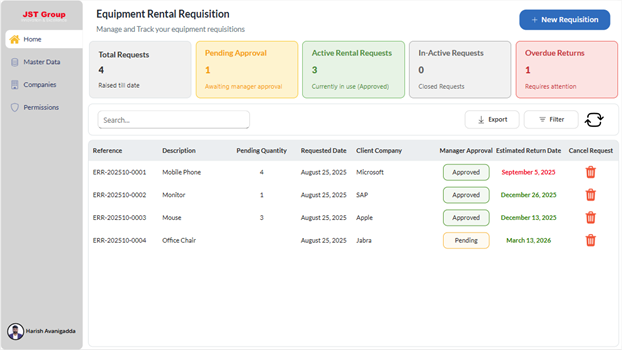
Equipment Rental Requisition Application
1. Problem Statement
The asset requisition process was fragmented, heavily reliant on spreadsheets, manual tracking, and email-based communication. This led to delays in approvals, lack of visibility into asset availability, inconsistent data across departments, and frequent miscommunication. The operations team needed a centralized platform to manage asset master data, streamline requisitions, control user access, and ensure accurate tracking of equipment utilization across the organization.
2. Solution
The PowerApps-based Equipment Rental Requisition Application consolidated all asset-related processes into a single, secure, and role-based platform that optimized both operational efficiency and compliance.
Centralized Asset Master Data
- Unified repository for all equipment details including asset type, specifications, serial numbers, manufacturers, locations, and status.
- Accessible only to Administrators and Approvers, ensuring data integrity and controlled updates.
Role-Based Access Control
- Three-tier user roles: Administrator, Approver, and Requester.
- Administrators manage master data and configuration settings.
- Approvers review and authorize requests.
- Requesters submit equipment requisitions without access to sensitive master data.
Equipment Requisition Workflow
- Structured request forms allow employees to select assets, specify usage period, and submit for approval.
- Automated routing sends requests to designated approvers based on asset type or department.
Approval Processing
- Approvers receive real-time notifications and can approve, reject, or request modifications.
- Approval history is fully trackable, improving accountability and audit-readiness.
Availability & Allocation Visibility
- The system checks asset availability before allowing requests to proceed, preventing double bookings.
- Administrators can view current allocations, upcoming bookings, and return dates at a glance.
Document & Data Management
- Stores equipment documents such as warranties, purchase invoices, manuals, and calibration certificates.
- Ensures all stakeholders work with up-to-date, centralized asset information.
Operational Insights
Dashboards display asset utilization rates, frequent requesters, approval turnaround times, and upcoming returns, enabling smarter decision-making.
3. Impact on Operations
Operational Efficiency Boost
- Reduced manual coordination by over 50%, enabling teams to focus on execution rather than administrative overhead.
Improved Asset Visibility
- Real-time insights into asset status minimized booking conflicts and eliminated uncertainty around equipment availability.
Enhanced Governance & Compliance
- Role-based security and audit logs improved data accuracy and reduced unauthorized modifications to master data.
Faster Turnaround Times
- Automated approval routing and notifications accelerated request processing cycles, improving overall workflow agility.
Streamlined Resource Planning
- Centralized tracking of allocations and returns helped management optimize asset rotation and plan procurement more effectively.
Better User Experience
- Simplified request process reduced user errors and increased adoption across departments.


Ready to transform your business with Power Platform? Get in touch with our experts today to discuss how we can empower your organization.
Mr. Harish Avanigadda
Email: HarishA@jst-group.com